

How to Teach Courage to Kids: Bravery Beyond Superheroes
In today’s world, it is easy for children to find courageous heroes all around them. These heroes may be family members, teachers, celebrities, or fictional characters. In fact, children often do not have only one hero throughout their development. Research shows that adults, on average, list around five individuals whom they define as heroes based on their courage, and these role models can change over time.
As children grow, research suggests their understanding of courage becomes more complex as they develop. Different heroes may resonate with children at different stages, depending on their experiences and how they see bravery expressed in the world around them.
Why Kids Often See Courage Through Superheroes
Fictional heroes, such as superheroes, often resonate strongly with young children. Research shows that exposure to superhero media can influence children’s behavior and understanding of bravery.
While superheroes demonstrate positive acts of courage by saving and helping others, they also often use acts of aggression to do so. This can be confusing for children, who may struggle to understand how an act can have good intentions but not be appropriate for real-life situations (like starting a fight to protect a loved one from a villain).
This is supported by additional research that suggests children’s beliefs around courage often center on physical acts of bravery when they are younger, rather than on more abstract and socially courageous behaviors. Therefore, a child may not fully recognize that superheroics are just fantastical depictions of bravery, which may lead them to believe that acts of bravery require similar approaches as these fictional heroes.

How to Teach Courage to Kids in Everyday Life
Caregivers play an important role in helping children understand that courage isn’t just about physical strength or fearlessness. They can talk with their child about various social-emotional topics, such as how they can show bravery in different ways or how other people may think about acts of courage.
Research finds that these kinds of conversations can strengthen young children’s social understanding and help them develop the ability to see different perspectives of those around them.
With that in mind, it is possible that by discussing bravery beyond superheroes, caregivers can help their little ones to properly process how superheroes, and other similar fictional characters, may differ from how expressions of this courage are shown in the real world.
Next we'll share some suggestions to help you talk about courage with your child in ways that will broaden their understanding of this important value.
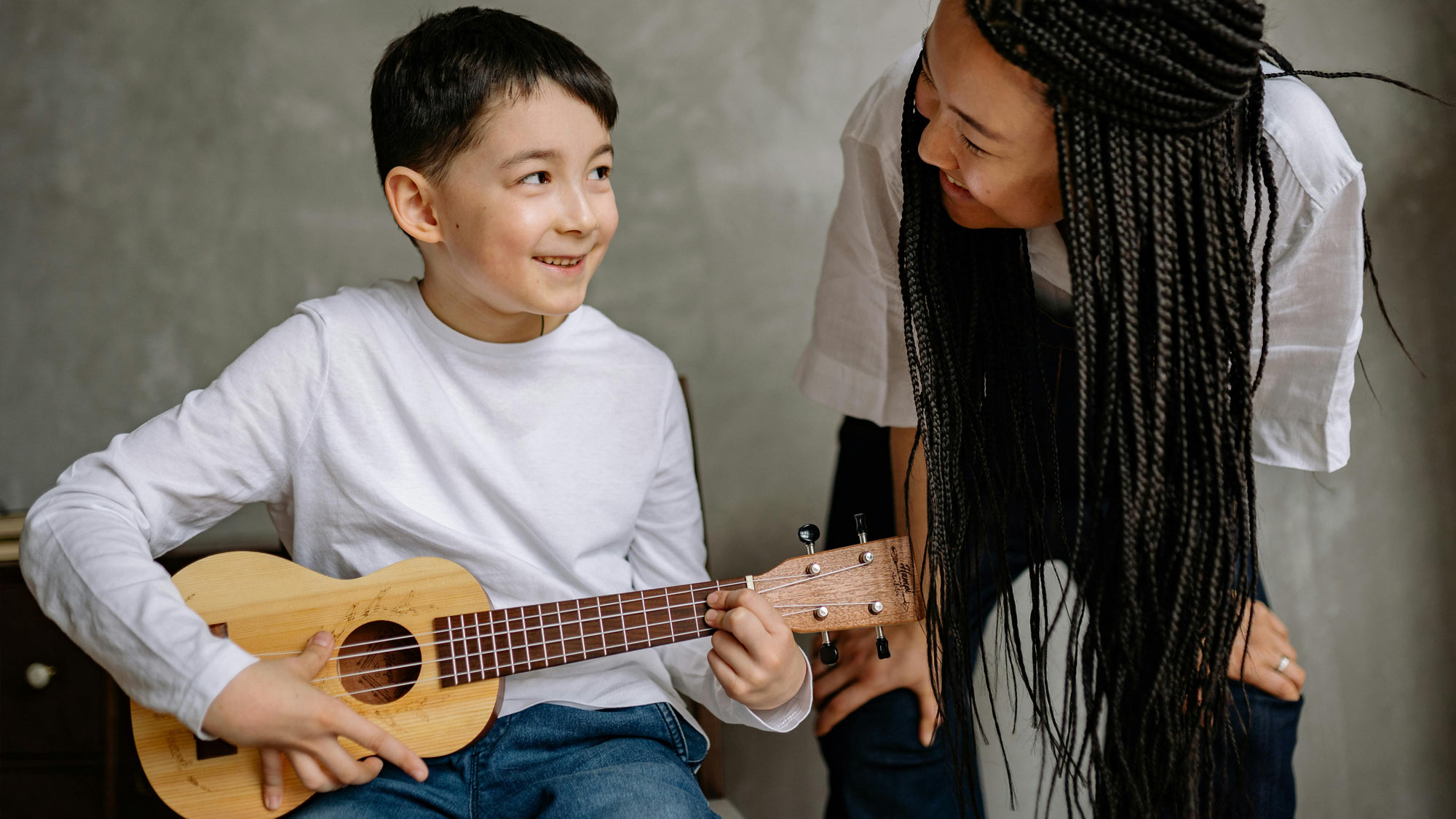
Teach Kids There’s More Than One Way to Be Brave
Even though physical bravery is often highlighted as the primary form of courage in superhero media, courage goes far beyond risk-taking or fearlessness.
Younger children tend to discuss acts of bravery and the feeling of courage as simply not having any fear, particularly when facing physical risk. However, research studies show that courage-based behaviors can take many different forms. Discussing the types of courage is an important tool caregivers can use to help deepen little ones’ perceptions of this value.
A great way to start is to ask your child how they define courage, then build on their response by introducing other examples.
Understand the Many Ways Kids Can Show Courage
According to research, children’s courageous behaviors can be classified into four categories:
- Physical Bravery – Facing physical risk or challenges.
- Moral Courage – Standing up for or protecting others.
- Psychological Courage – Overcoming personal fears, anxiety, or uncomfortable feelings.
- Combined Courage – Facing situations that involve both physical and emotional challenges.
Given that research also demonstrates that young children’s ability to discuss emotions significantly increases with time and experience, providing varied conversations about different forms of bravery (whether in the categories above or otherwise) can be a powerful tool for expanding children’s perception of courage.
Providing children with examples across these categories can help expand their understanding of courage and emotional awareness over time.
A great way to start with your child:
- Have them tell you their definition of courage
- Build off of their initial response by providing examples of other types of bravery
- Point out different ways courage appears in everyday life
- Ask how your child might show courage in different situations
- Encourage them to think about “hidden” or “secret” acts of bravery
This helps children begin to recognize courage beyond what is typically shown in the media.

Encourage Kids to Face Different Types of Fears
Children often look to caregivers for encouragement when facing challenges or fears.
Research highlights the importance of supportive language and feedback when helping children develop courage. One helpful framework is the “Circle of Courage,” which suggests children need four key experiences:
- Belonging: “I know this may feel scary, and I’m here for you.”
- Mastery: “If you work hard at it, I have no doubt that you can be brave!”
- Independence: “I really appreciate how you chose to speak up for what you needed, rather than keep quiet.”
- Generosity: “It is so courageous how you are working hard to stand up for your friends.”
Ensuring that children’s “Circle of Courage” is being supported through verbal encouragement and feedback can help children across different situations that spark fear. Research shows that encouragement of bravery can help children better manage anxiety and overcome fears.
You can support this by:
- Recognizing effort, not just outcomes
- Celebrating moments of bravery
- Calling out courage—even when your child doesn’t notice it themselves

Break out the Bravery Books to Teach Courage
Shared reading is a powerful tool for supporting important child development outcomes and social-emotional learning.
Children’s books often explore social and emotional situations involving fear, bravery, and emotional growth. Research shows that reading together repeatedly:
- Exposes children to different perspectives
- Supports emotional understanding
- Encourages meaningful conversations
Reading books about experiences like starting school, trying something new, or being away from a caregiver can help children better understand courage in real-life situations.
Using books to spark conversations about bravery can deepen your child’s understanding while also creating opportunities for you and your child to have fun and bond.

Raising Courageous Kids Starts with Everyday Moments
Courage doesn’t always look like a superhero saving the day.
Sometimes, it looks like trying something new, speaking up, or facing something that feels a little scary.
Every family is unique, and what works for one caregiver may not be the right fit for another. Child development is an ever-changing adventure, so feel empowered to adapt these strategies in ways that resonate best with your own style and family dynamics.
Remember, by helping children recognize and practice courage in everyday life, we can support them in growing into confident, resilient individuals.
Access even more resources and activities around courage on the Tiny Souls app.
Research Represented:
Brendtro, L. K., Brokenleg, M., & Van Bockern, S. (2005). The circle of courage and positive psychology. Reclaiming Children and Youth, 14(3), 130-136.
Brokenleg, M., & Van Bockern, S. (2003). The science of raising courageous kids. Reclaiming Children and Youth, 12(1), 22-26.
Coyne, S. M., Stockdale, L., Linder, J. R., Nelson, D. A., Collier, K. M., & Essig, L. W. (2017). Pow! Boom! Kablam! Effects of viewing superhero programs on aggressive, prosocial, and defending behaviors in preschool children. Journal of Abnormal Child Psychology, 45, 1523-1535.
Doyle, B. G., & Bramwell, W. (2006). Promoting emergent literacy and social–emotional learning through dialogic reading. The Reading Teacher, 59(6), 554-564.
Dunn, J., Brown, J., & Beardsall, L. (1991). Family talk about feeling states and children's later understanding of others' emotions. Developmental Psychology, 27(3), 448–455.
Goethals, G. R., & Allison, S. T. (2012). Making heroes: The construction of courage, competence and virtue. Advances in Experimental Social Psychology, 46, 183–235.
Ridgeway, D., Waters, E., & Kuczaj, S. A. (1985). Acquisition of emotion-descriptive language: Receptive and productive vocabulary norms for ages 18 months to 6 years. Developmental Psychology, 21(5), 901-908.
Rosenkoetter, L. I., Rosenkoetter, S. E., & Acock, A. C. (2009). Television violence: an intervention to reduce its impact on children. Journal of Applied Developmental Psychology, 30, 381–397. doi:10.1016/j.appdev.2008.12.019.
Santilli, S., Ginevra, M. C., Camussi, E., Lodi, E., Nota, L., & Patrizi, P. (2021). Courage in childhood: Classifying the actions of courage performed by elementary school students. European Journal of Developmental Psychology, 18(5), 678-694.
Schapira, R., & Aram, D. (2020). Shared book reading at home and preschoolers’ socio-emotional competence. Early Education and Development, 31(6), 819-837.
Silk, J. S., Sheeber, L., Tan, P. Z., Ladouceur, C. D., Forbes, E. E., McMakin, D. L., ... & Ryan, N. D. (2013). “You can do it!”: The role of parental encouragement of bravery in child anxiety treatment. Journal of Anxiety Disorders, 27(5), 439-446.
Szagun, G. (1992). Age-related changes in children's understanding of courage. The Journal of Genetic Psychology, 153(4), 405-420.
Szagun, G., & Schauble, M. (1997). Children's and adults' understanding of the feeling experience of courage. Cognition & Emotion, 11(3), 291-306.
Tompkins, V., Benigno, J. P., Kiger Lee, B., & Wright, B. M. (2018). The relation between parents' mental state talk and children's social understanding: A meta‐analysis. Social Development, 27(2), 223-246.
Support Social & Emotional Development Everyday
Help your child develop essential social-emotional skills with our full library of research-backed modules, toolkits, and hundreds of pieces of content you can access anytime!
