

How to Persevere: 3 Ways to Teach Kids the Power of "Yet"
Learning to ride a bike, button a shirt, or complete a tricky puzzle can feel like a big challenge for little ones. When something doesn't come easily, children may quickly become frustrated or decide they simply can't do it.
But learning how to persevere is an important part of early childhood development. With patience, encouragement, and opportunities to practice, children can begin to understand that their abilities grow over time.
One of the simplest ways parents and caregivers can support this process is through a powerful little word: “yet.”
By introducing “yet” into everyday conversations, we can help children shift their thinking from “I can't do this” to “I can't do this yet,” opening the door to new possibilities, problem-solving, and perseverance.
Why Is Learning How to Persevere Important for Young Children?
Perseverance is the ability to keep working toward a goal, even when something feels difficult or takes longer than expected. It's a valuable social-emotional skill that helps children navigate challenges, develop confidence, and approach new experiences with curiosity.
However, young children are still developing their understanding of time and the future. Concepts like tomorrow, next week, or practicing for several months can be difficult to grasp. This makes it challenging to understand why certain skills take time to learn.
That's where the power of “yet” comes in.
The word “yet” introduces the idea that our abilities aren't fixed. Just because a child can't do something today doesn't mean they won't be able to do it in the future.
This connects to the concept of a growth mindset, which is the belief that abilities can develop through learning, practice, and effective strategies.
Research suggests that when parents emphasize effort and learning rather than fixed abilities, children may develop stronger growth mindsets and academic outcomes over time (Gunderson et al., 2018).
Teaching children how to persevere isn't about pushing them to succeed at everything. It's about helping them recognize their progress, learn from challenges, and feel supported as they try.

1. Introduce the Word “Yet” in Everyday Conversations
For young children, understanding the meaning of “yet” is an important first step.
Start by explaining that “yet” means something hasn't happened or been learned right now, but it may happen with time, practice, and support.
Then, look for natural opportunities to introduce the word into everyday conversations.
Try saying:
- “You can't tie your shoes yet, but you're learning how!”
- “You haven't figured out that puzzle yet. What could we try next?”
- “You can't reach the pedals on your bike yet, but you're growing and getting stronger.”
When your child becomes frustrated and says, “I can't do it,” gently remind them that they're still learning.
You can also help them recognize the skills they've already developed. For example, remind them of a time when they couldn't walk, jump, or use a spoon on their own.
Try asking:
- “Remember when you couldn't do that yet? Look what you can do now!”
These conversations help children connect their past progress with the possibility of future learning.
Research suggests that consistent messages emphasizing effort can help support children's persistence (Wang et al., 2024).

2. Break Big Goals Into Smaller Steps
Big challenges can feel overwhelming, especially when children can't easily imagine the steps needed to reach their goals.
Breaking a task into smaller, manageable steps helps children experience progress along the way.
This approach is related to scaffolding, a learning strategy in which caregivers provide guidance and support while children develop new skills.
For example, if your child wants to learn how to ride a bike, they might begin by practicing their balance, learning to steer, and becoming comfortable pedaling before riding independently.
Try these simple strategies:
- Start small. Identify one achievable part of a larger goal that your child can practice today.
- Celebrate progress. Notice improvements, even when the overall goal hasn't been reached.
- Offer support. Demonstrate a skill, provide guidance, or practice together when needed.
- Explore new approaches. If something isn't working, encourage your child to consider another way to try.
When a child struggles, instead of immediately completing the task for them, you might ask, “What part could we try together?” or “What could we do differently?”
Breaking challenges into smaller steps gives children opportunities to build their problem-solving skills while developing confidence in their ability to learn.

3. Focus on What Your Child CAN Do
When children repeatedly experience difficulty, they may begin to believe that their abilities are fixed.
Statements like “I'm not good at this” or “I can't do anything right” can make it harder for children to feel motivated to keep trying.
Rather than focusing on what your child hasn't achieved, help them recognize what they're already capable of doing.
For example, if your child is struggling to complete a puzzle, you might say:
- “You found all the corner pieces! What should we try next?”
- “You figured out where that piece belongs by turning it around.”
- “This part is tricky. Let's look at the colors and shapes together.”
Focus on specific efforts, strategies, and progress, rather than simply telling your child they're smart or talented.
It's also important to set realistic expectations based on your child's current developmental abilities. A goal that's too difficult can create unnecessary frustration, even when a child is motivated to learn.
If your little one becomes overwhelmed, it's okay to take a break, offer additional support, or return to the challenge another day.
Perseverance doesn't mean children need to keep trying without stopping. Learning when to rest, ask for help, or try a different approach is part of developing healthy problem-solving skills.
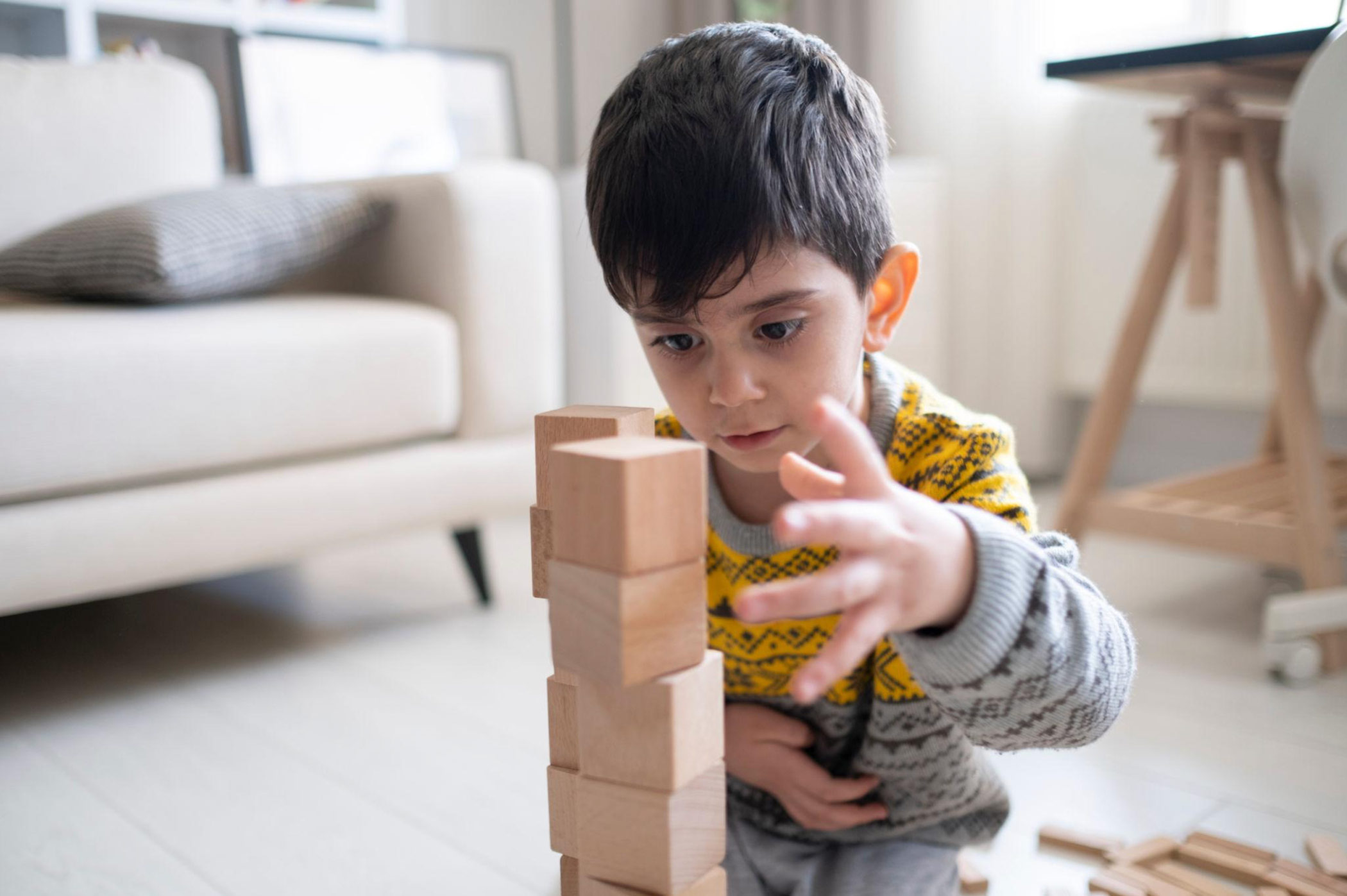
Helping Children Persevere Through Everyday Challenges
Teaching perseverance doesn't require special lessons or elaborate activities. Everyday moments offer meaningful opportunities for children to practice patience, problem-solving, and determination.
Whether your child is building a block tower that keeps falling, learning to zip their jacket, or practicing a new game, you can help them notice their efforts and recognize the progress they're making.
The goal isn't to eliminate frustration or ensure success every time. It's to help children feel supported as they learn to navigate challenges.
And remember, caregivers model perseverance, too. When something doesn't go as planned, you can show your child how you respond.
Try saying, “That didn't work the way I hoped. I'm going to try something different.”
These small moments demonstrate that learning is an ongoing process for everyone.
Growing Through the Power of “Yet”
Learning how to persevere takes time, and every child's journey will look different.
By introducing the word “yet,” breaking challenges into manageable steps, and focusing on what children can do, we can help them develop a more positive relationship with learning and trying new things.
Over time, these small, supportive interactions can help children approach challenges with greater confidence, curiosity, and resilience.
The next time your child says, “I can't do it,” remember the power of adding one little word: “yet.”
Keep Growing Perseverance with Tiny Souls
Looking for more ways to explore Perseverance with young children?
Tiny Souls gives families and early learning services stories, songs, activities, and research-informed resources designed to help children explore social-emotional skills through everyday moments.
Discover the Tiny Souls App:
Research Represented:
- Gunderson, E. A., Sorhagen, N. S., Gripshover, S. J., Dweck, C. S., Goldin-Meadow, S., & Levine, S. C. (2018). Parent praise to toddlers predicts fourth grade academic achievement via children's incremental mindsets. Developmental Psychology, 54(3), 397–409.
- Mermelshtine, R. (2017). Parent–child learning interactions: A review of the literature on scaffolding. British Journal of Educational Psychology, 87(2), 241–254.
- Muenks, K., Wigfield, A., & Eccles, J. S. (2018). I can do this! The development and calibration of children's expectations for success and competence beliefs. Developmental Review, 48, 24–39.
- Prabhakar, J., & Hudson, J. A. (2014). The development of future thinking: Young children's ability to construct event sequences to achieve future goals. Journal of Experimental Child Psychology, 127, 95–109.
- Wang, E., Radovanovic, M., Sommerville, J., & Leonard, J. A. (2024). Practice what you preach: Consistent messages about the value of effort foster children's persistence. Proceedings of the Annual Meeting of the Cognitive Science Society, 46.
- Wood, D., Bruner, J. S., & Ross, G. (1976). The role of tutoring in problem solving. Journal of Child Psychology and Psychiatry, 17(2), 89–100.
Support Social & Emotional Development Everyday
Help your child develop essential social-emotional skills with our full library of research-backed modules, toolkits, and hundreds of pieces of content you can access anytime!
