

Gentle Discipline: 3 Ways to Navigate Conflict with Young Children
Conflict is a natural part of growing up. Whether it’s two children reaching for the same toy, a toddler refusing to follow a direction, or a preschooler struggling with a boundary, these moments can be challenging for children and the adults supporting them.
They can also be valuable opportunities for learning.
Gentle discipline helps young children understand boundaries, manage big emotions, and build healthier ways to navigate conflict. Rather than focusing only on stopping a behavior, a gentle approach helps children learn what they can do differently next time.
For parents, guardians, educators, and other caregivers, this means approaching challenging behavior with warmth, clear expectations, and age-appropriate guidance.
Research has found that caregiving characterized by warmth, two-way communication, and fair discipline is associated with greater life satisfaction later in life.
So, what can gentle discipline look like in everyday moments? Here are three strategies for helping young children navigate conflict while building skills they can carry with them as they grow.
First, Understand How Conflict Resolution Develops
Before we expect young children to resolve conflicts, it helps to understand what they are developmentally ready to do.
Before age three, most children have very limited conflict resolution skills. They are still learning how their actions affect other people and may not yet have the language or social-emotional skills to explain what they need.
A toddler might repeatedly say “no,” ignore a request, grab an object, cry, or become overwhelmed during a conflict. In these moments, trying to explain at length why a behavior was wrong may not be as effective as redirecting them toward what they can do.
Instead of only saying, “Don’t grab,” for example, you might try:
“Sam is using that toy right now. Let’s find another toy while we wait.”
Around the preschool years, children may begin recognizing the immediate effects of their behavior on others. A child might understand, for example, “She is crying because I took her toy.”
With this growing awareness, children can begin experimenting with strategies like taking turns, negotiating, compromising, and solving problems together.
As children approach kindergarten age, they also begin developing a deeper understanding of concepts such as fairness and rules. This can sometimes make conflict more complicated, as children may have difficulty understanding exceptions to a rule or situations that aren’t completely black and white.
At every stage, conflict offers an opportunity for gentle conversations about boundaries, emotions, relationships, and what children can try next time.
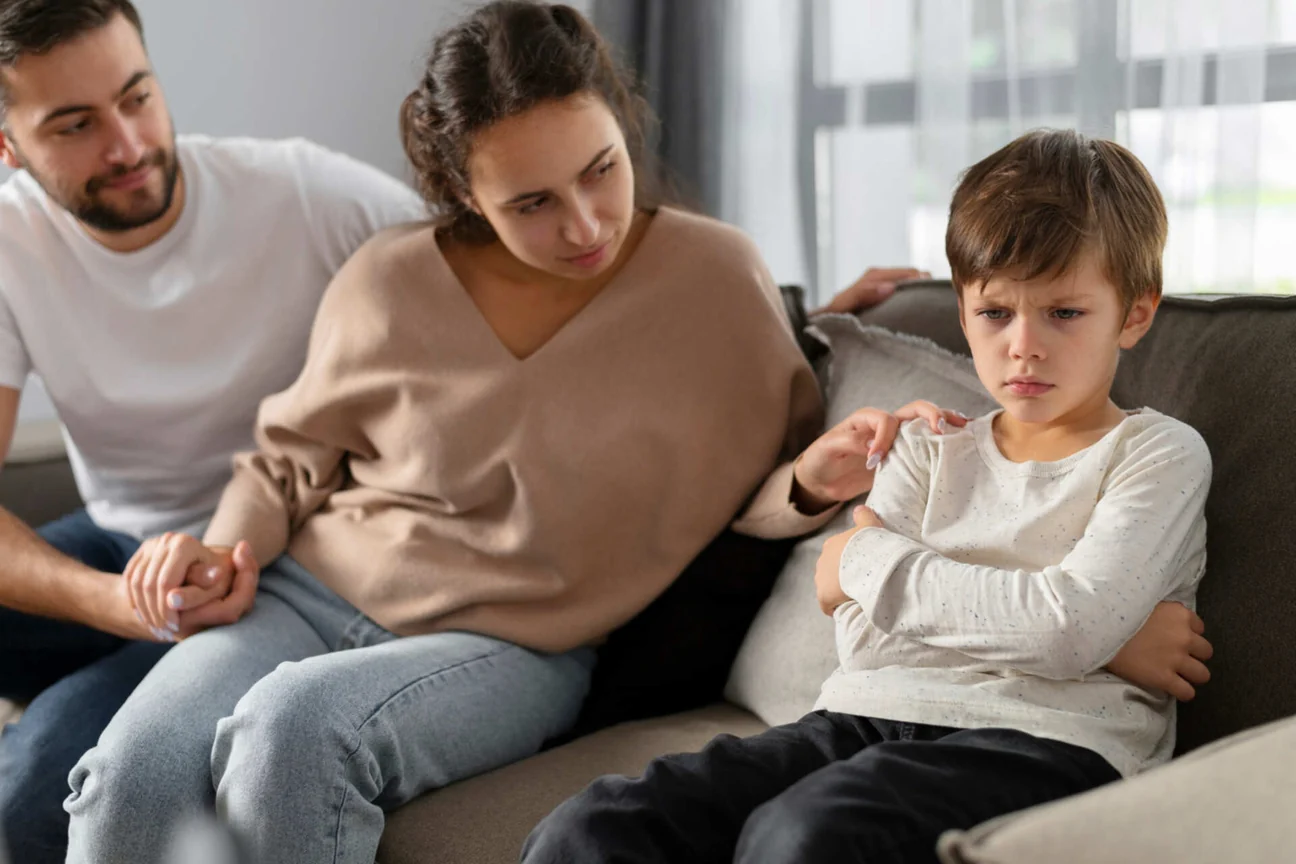
1. Practice Conflict Resolution Before a Conflict Happens
It is much easier to learn a new skill when we aren’t already overwhelmed by emotions.
The same is true for children.
Pretend play and role-play can give young children a safe, playful way to practice navigating challenging situations before they happen in real life. Research suggests that pretend play can support children's cognitive and social development, while role-playing gives children opportunities to explore different perspectives and responses.
Try acting out a common conflict your child or group encounters.
At home, you might pretend to give your child a blue cup when they wanted the purple one.
In an early learning setting, you might use dolls or toys to act out two children wanting the same toy.
The first time, let children show you how they might naturally respond. Then repeat the scenario and explore other possibilities together.
You might ask:
- “What could you say if you wanted a turn?”
- “What could you do while you wait?”
- “How do you think the other person might feel?”
- “What else could we try?”
You don't need to create an elaborate activity. Even talking through an imaginary situation in the car, around the dinner table, or during group time can help children think about different ways to respond.
The goal isn't to find one “perfect” response. It's to give children more tools to choose from when a real conflict happens.
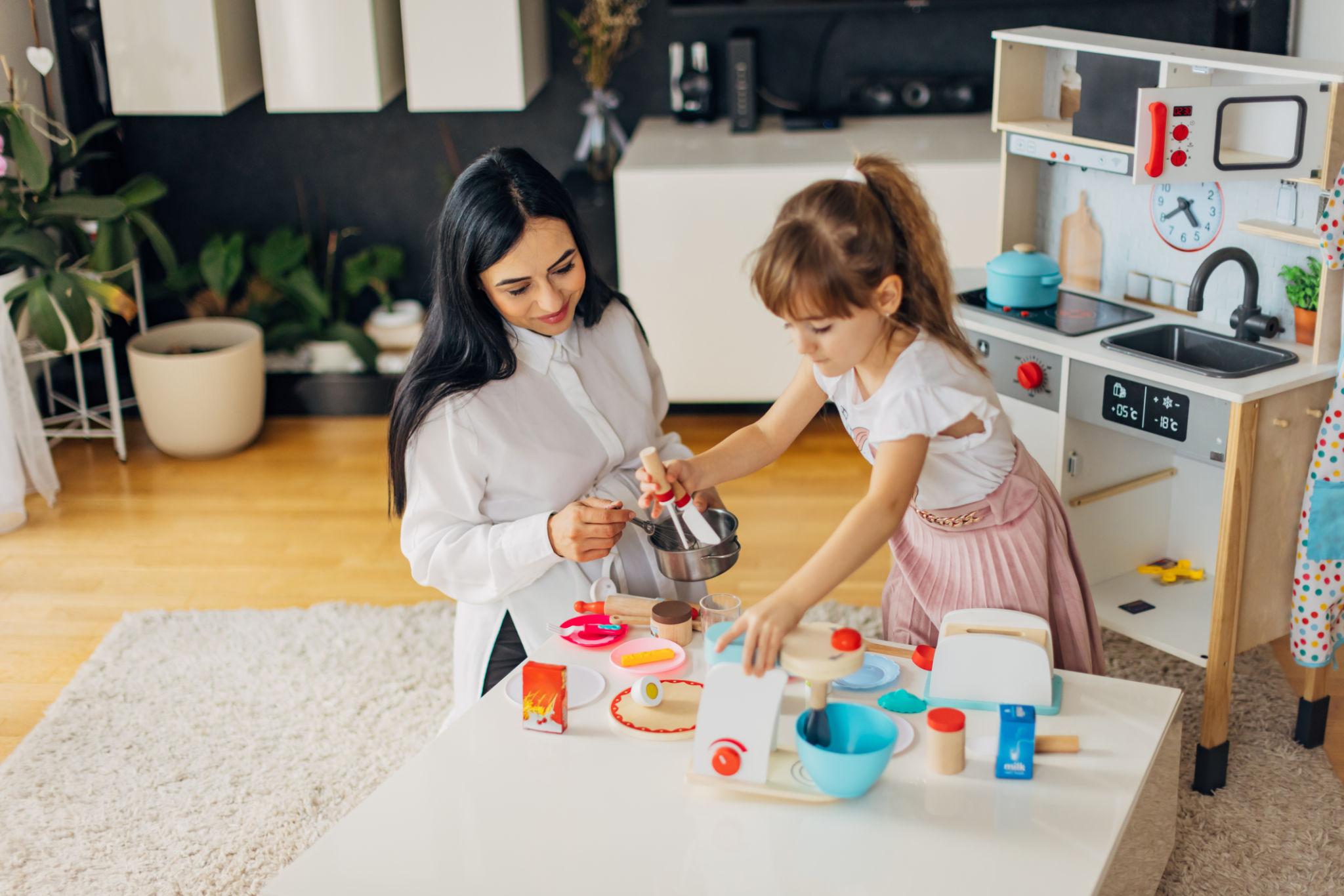
2. Use Calm, Clear, and Gentle Communication
It can be difficult to communicate gently when emotions are running high. But when adults become overwhelmed, communication can become harder for children, too.
Young children are still developing both language and emotional regulation skills, so keeping communication calm, clear, and simple can make boundaries easier to understand.
If a conflict becomes heated, create a moment for everyone to regulate before trying to solve the problem.
Research suggests that slow, deep breathing can help reduce stress and support emotional regulation. You might take a few breaths yourself and invite the child to join you.
Then communicate the boundary using simple language.
For example:
- “Hitting hurts. I won't let you hit. You can tell me you're angry.”
Or:
- “You really wanted that toy. It's still Maya's turn. Let's decide what you can play with while you wait.”
Gentle discipline doesn't mean avoiding limits. Children still need clear and consistent boundaries. Research suggests that appropriate limits and guidance from caregivers can support children's developing self-esteem.
Once everyone is calmer, return to what happened. Talk about why the boundary matters and what could happen differently next time.
In an early learning environment, this might mean helping two children talk through a disagreement together. At home, it might mean returning to a difficult moment later in the day when both you and your child have had time to reset.
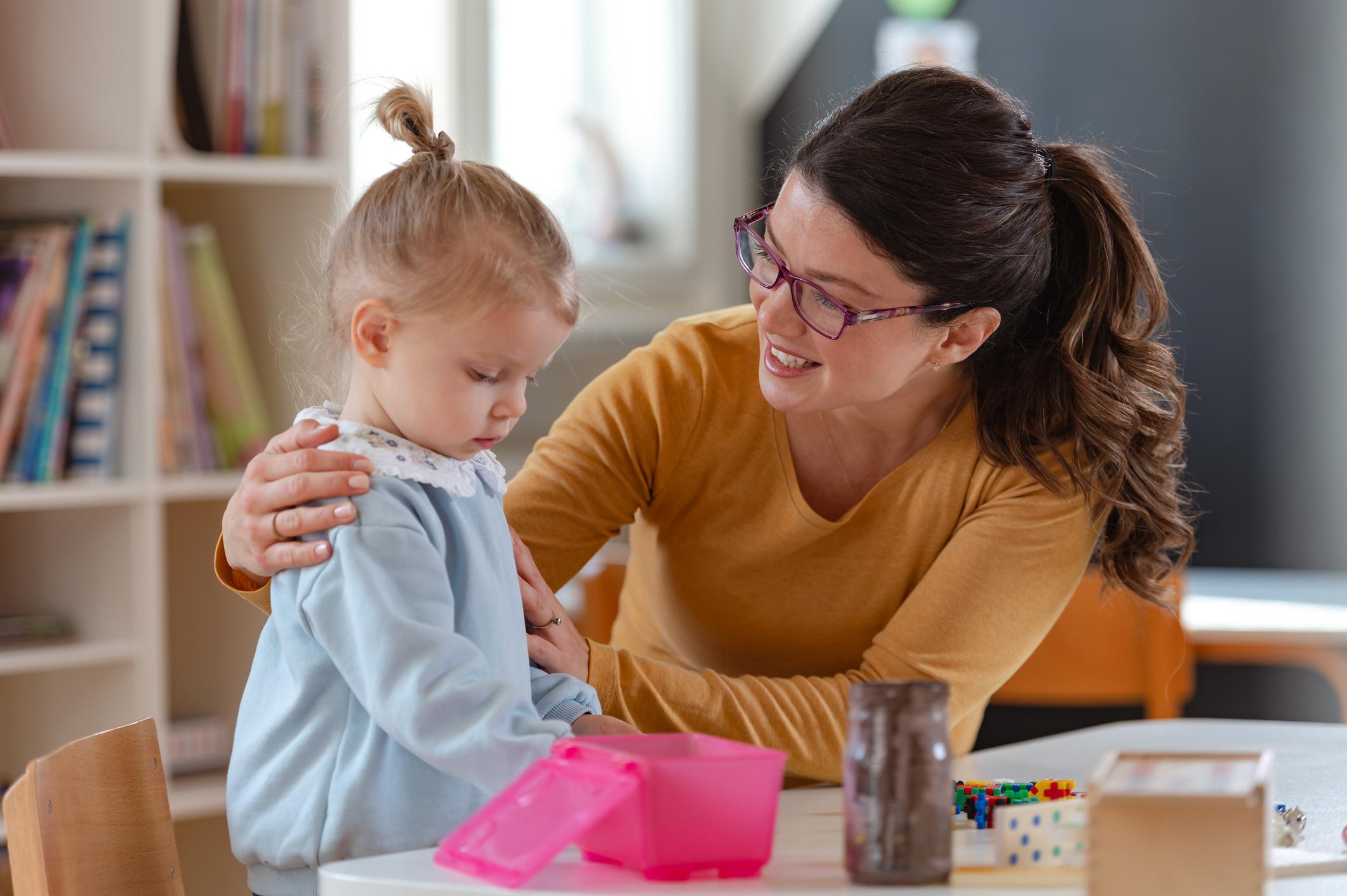
3. Notice and Praise the Effort
Learning how to handle conflict takes practice, and progress won't always look perfect.
A child who usually grabs a toy may remember to ask for a turn but still become upset when the answer is “no.” A child who normally yells may start by using their words and then become frustrated.
Those moments still represent growth.
Noticing the effort children are making can help reinforce the behaviors you want them to continue practicing. Research suggests that praising positive behaviors can be more effective for encouraging behavior change than repeatedly focusing on negative ones. Focusing on effort can also encourage children to keep trying.
Try being specific about what you noticed:
- “I saw you wait for your turn even though waiting was hard.”
- “You were really frustrated, and you used your words to tell me.”
- “You and Leo both wanted the blocks, and you found a way to build together.”
Specific praise helps children understand what they did well rather than simply hearing that they were “good.”
You can even acknowledge progress in the middle of a difficult moment:
- “You're still feeling angry, but I noticed you're keeping your hands gentle.”
As children's conflict resolution skills grow, take time to reflect on that progress with them. Reminding children of something that used to be difficult and recognizing how they handle it now can help them see that these are skills they are capable of learning.
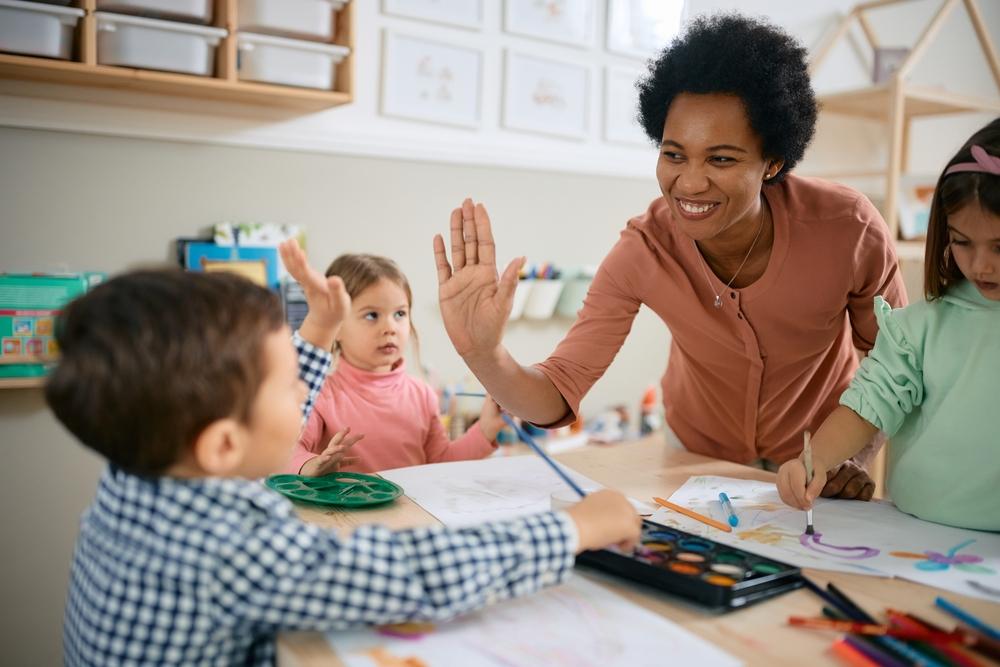
Gentle Discipline Is About Teaching, Not Perfection
Conflict is going to happen.
Children will grab toys, resist boundaries, become frustrated, forget strategies they've practiced, and have days when managing their emotions feels especially difficult. Adults will have difficult days, too.
Gentle discipline isn't about eliminating conflict or responding perfectly every time. It's about using everyday conflicts as opportunities to teach children the skills they'll eventually need to navigate them more independently.
- For a toddler, that might mean redirecting them toward a safe alternative.
- For a preschooler, it might mean helping them find the words to express what they need.
- For an older child, it might mean talking together about fairness, consequences, and how their choices affect other people.
At home and in early learning settings, these everyday moments give children opportunities to practice communication, empathy, emotional regulation, problem-solving, and gentleness.
And those skills can grow right alongside them.
Keep Growing Gentleness with Tiny Souls
Looking for more ways to explore Gentleness with young children?
Tiny Souls gives families and early learning services stories, songs, activities, and research-informed resources designed to help children explore social-emotional skills through everyday moments.
Discover the Tiny Souls App:
Research Represented:
- Bergen, D. (2002). The role of pretend play in children's cognitive development. Early Childhood Research & Practice, 4(1), 1–13.
- Brown, S. L., McCobin, A., Easley, S., & McGoey, K. E. (2020). Supporting anxious children in the preschool classroom. YC Young Children, 75(3), 16–27.
- DeHart, T., Pelham, B. W., & Tennen, H. (2006). What lies beneath: Parenting style and implicit self-esteem. Journal of Experimental Social Psychology, 42(1), 1–17. https://doi.org/10.1016/j.jesp.2004.12.005
- Fincham, G. W., Strauss, C., Montero-Marin, J., & Cavanagh, K. (2023). Effect of breathwork on stress and mental health: A meta-analysis of randomised-controlled trials. Scientific Reports, 13(1), Article 432. https://doi.org/10.1038/s41598-022-27247-y
- Lavrič, M., & Naterer, A. (2020). The power of authoritative parenting: A cross-national study of effects of exposure to different parenting styles on life satisfaction. Children and Youth Services Review, 116, Article 105274. https://doi.org/10.1016/j.childyouth.2020.105274
- Nieman, P., Shea, S., Canadian Paediatric Society, & Community Paediatrics Committee. (2004). Effective discipline for children. Paediatrics & Child Health, 9(1), 37–41. https://doi.org/10.1093/pch/9.1.37
- Piaget, J. (1932). The moral judgment of the child. New York: Harcourt-Brace.
- Singer, E., Van Hoogdalem, A. G., De Haan, D., & Bekkema, N. (2011). Day care experiences and the development of conflict strategies in young children. Early Child Development and Care, 182(12), 1661–1672. https://doi.org/10.1080/03004430.2011.640753
- Wang, E., Radovanovic, M., Sommerville, J., & Leonard, J. A. (2024). Practice what you preach: Consistent messages about the value of effort foster children's persistence. Proceedings of the Annual Meeting of the Cognitive Science Society, 46.
Support Social & Emotional Development Everyday
Help your child develop essential social-emotional skills with our full library of research-backed modules, toolkits, and hundreds of pieces of content you can access anytime!
