
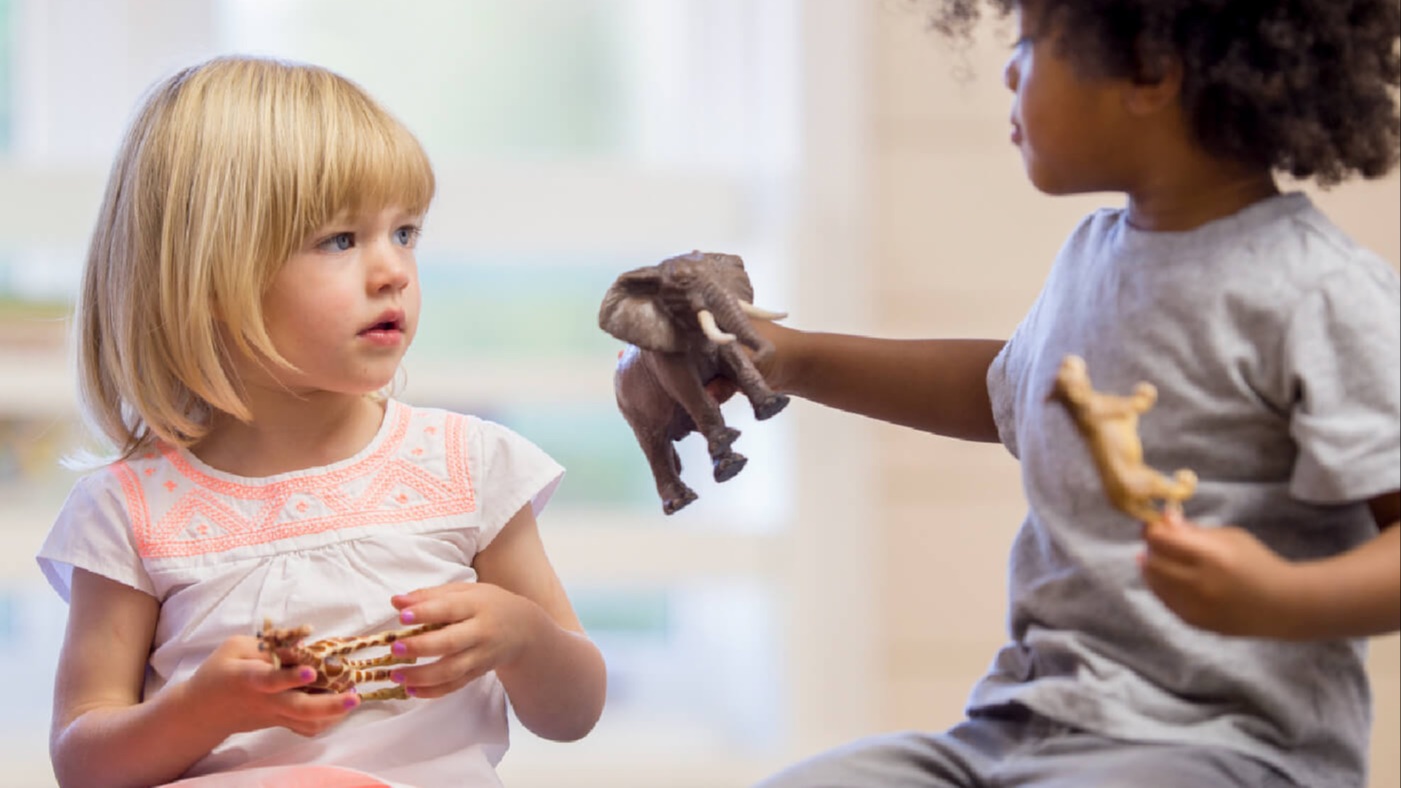
Moving From “Mine” to “Ours”: Helping Little Ones Grow Generosity
If your child has ever clutched a beloved toy and declared, “Mine!”, you’re definitely not alone. These moments can feel challenging, but they are actually a normal and important part of development. Early possessiveness doesn’t mean your child is being selfish—it means they are learning. They’re figuring out how ownership works, how to make choices, and how to form relationships with others.¹ All of this lays the groundwork for generosity later on.
“Mine!”: Understanding Early Possessiveness
When young children hold tightly to something they love, they’re often trying to protect a sense of comfort, control, or identity. Early possessiveness grows from a child’s developing sense of self and boundaries.¹
At this age, children also tend to believe that whoever touches a toy first owns it—so the idea of sharing can feel confusing or even a bit scary.¹ ² A favorite blanket or stuffed animal might feel especially personal and soothing, offering predictability and security.³ When your little one hesitates to share, it often means they’re trying to protect something that feels special.
As children grow, they slowly learn that sharing doesn’t mean losing something forever. They begin to understand fairness, cooperation, and what it means to play with others.¹ ⁴ Acknowledging their feelings during these moments helps them feel safe, which increases their willingness to consider more generous choices.
You can gently support this learning by validating their emotions and offering reassurance. For example:
“You really care about Teddy. You can hold him for now. When you feel ready, we can find a way to play with him together.”
This kind of warm, respectful response shows your child that their feelings matter and that they’re not being forced—two key ingredients for building generosity over time.
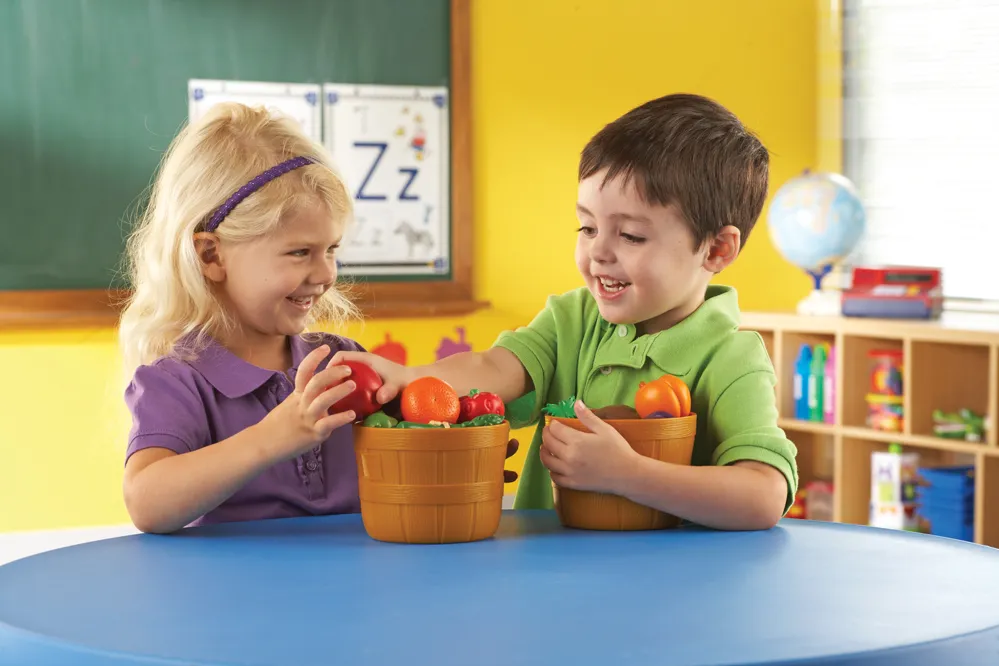
Growing Generosity: Moving From “Mine” to “Ours”
Generosity doesn’t appear overnight. It develops slowly, in small everyday moments supported by patient, caring adults. While children may not fully grasp fairness and generosity until later childhood, they can absolutely practice these early skills now.⁴ ⁵
When generosity is connected to warmth and positive emotions, children are more likely to repeat those behaviors. Research shows that modeling generous actions and naming these moments helps kids build caring habits that stick.⁵ Little by little, generosity becomes a natural part of how they relate to others.
Here are a few simple ways to help:
Model generosity and describe your actions.
Children learn so much by watching you. When you narrate your generous acts—
“I’m bringing soup to our neighbor because she’s sick, and it might help her feel happy and loved!”—you show your child what kindness looks like in everyday life.⁵
Use warm, positive language to label generosity.
Putting words to your child’s actions helps them connect feelings with meaning:
“That was generous—you shared something really special to you.”
This reinforces the idea that generosity feels good—for them and for others.⁵
Create activities that involve shared effort.
Working together gives kids a chance to practice generosity through cooperation. Try:
“Let’s build this puzzle together—you find the green pieces, and I’ll gather the red ones.”
Talk about how their actions affect others.
Help them notice the impact of their kindness:
“You shared your crayons, and look how happy your friend is now.”
These simple reflections help build empathy and strengthen generous habits.⁵
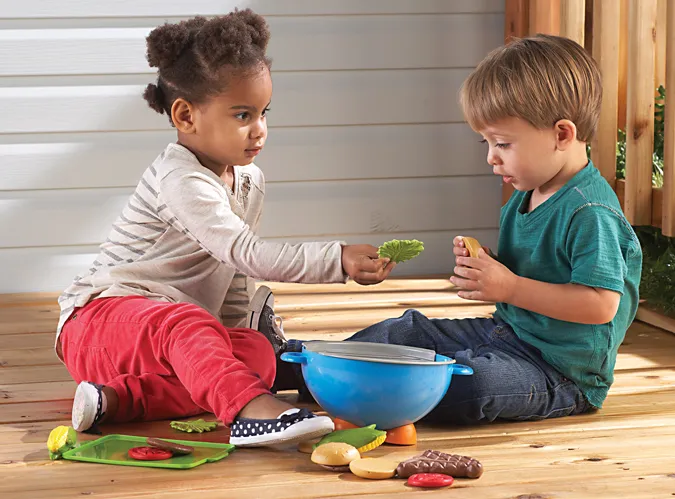
From “Mine” to “Ours”: A Journey Worth Celebrating
Your child’s early “mine!” moments are not obstacles—they’re opportunities. With patience, warmth, and consistent modeling, you can help them develop generosity that grows with them. Every shared crayon, every team effort, every moment of kindness lays a foundation for lasting empathy and connection.
Research Represented:
-
Nancekivell, S. E., Van de Vondervoort, J. W., & Friedman, O. (2013). Young children’s understanding of ownership. Child Development Perspectives, 7(4), 243–247.
-
Friedman, O., & Neary, K. R. (2008). Determining who owns what: Do children infer ownership from first possession? Cognition, 107(2), 829–849.
-
Pesowski, M. L., Nancekivell, S. E., Taşimi, A., & Friedman, O. (2022). Ownership and value in childhood. Annual Review of Developmental Psychology, 4(1), 161–183.
-
Smith, C. E., Blake, P. R., & Harris, P. L. (2013). I should but I won’t: Why young children endorse norms of fair sharing but do not follow them. PLoS ONE, 8(3), e59510.
-
Brownell, C. A., Svetlova, M., Anderson, R., Nichols, S. R., & Drummond, J. (2013). Socialization of early prosocial behavior: Parents’ talk about emotions is associated with sharing and helping in toddlers. Infancy, 18(1), 91–119.
Support Social & Emotional Development Everyday
Help your child develop essential social-emotional skills with our full library of research-backed modules, toolkits, and hundreds of pieces of content you can access anytime!
